How to Install and Run the Externally Fed Rotary Drum Screen
This guide outlines the proper installation, commissioning, daily maintenance, and basic troubleshooting practices for the externally fed rotary drum screen. Following these steps will help ensure stable operation and extend the service life of the equipment.
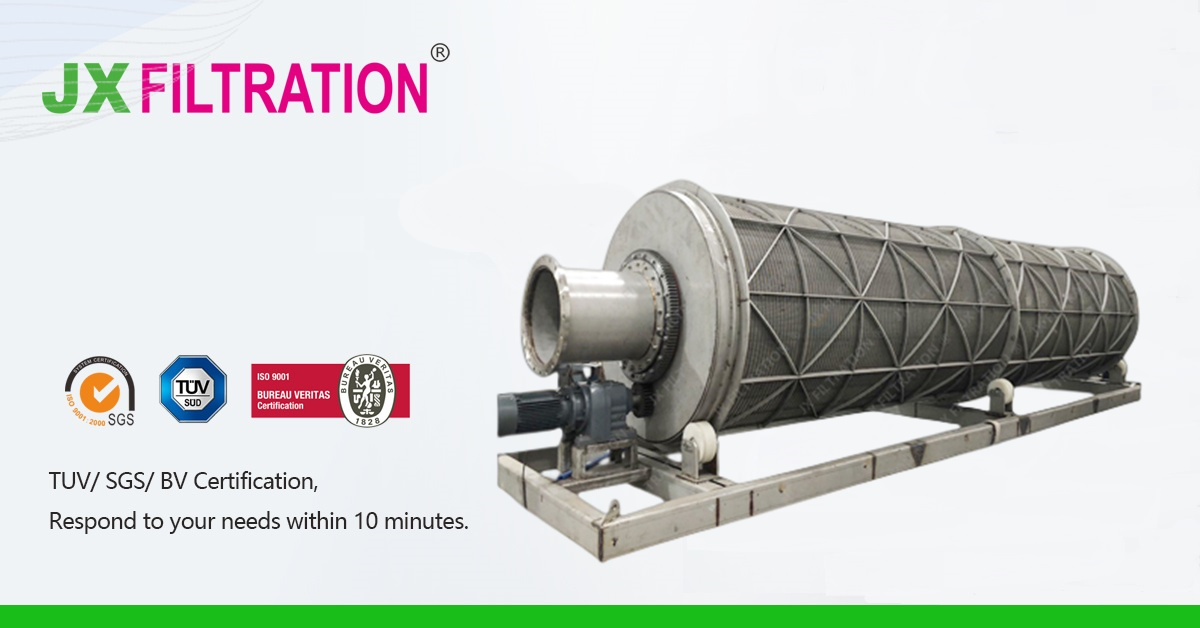
1. Preparations
-
Familiarize yourself with the equipment structure, functions, and characteristics by reviewing the installation diagram. Ensure all relevant technical requirements are understood.
-
Designate trained personnel to handle loading and unloading. After unloading, inspect all components against the delivery list and installation drawing to check for completeness and any signs of damage. If necessary, perform maintenance, cleaning, and lubrication before arranging the parts neatly and covering them with tarpaulin or plastic sheeting.
2. Installation
-
Use the lifting lugs on top of the equipment to hoist the unit. Position it to ensure the main shaft is level and the entire machine sits on a horizontal plane. Slowly move the equipment to the designated location.
-
Connect the water inlet and outlet to corresponding pipelines using flanges and rubber gaskets to ensure a tight seal.
-
Connect the vent valve to the raw water tank. The vent valve is used during equipment cleaning.
-
Carefully inspect all components to confirm they are securely connected and free from looseness.
3. Commissioning
-
Before startup, perform a comprehensive inspection and lubrication. Verify that all fasteners are tightened and the oil level in the speed regulator gearbox is correct.
-
Check the instant-start motor to ensure the screen cylinder rotates in the correct direction before starting.
-
Begin with a no‑load trial run for 2 to 3 hours. If no abnormalities are observed, proceed with normal operation. (Note: This equipment has undergone an 8‑hour no‑load test prior to delivery.)
4. Daily Maintenance
-
During operation, if fibrous impurities become tangled around the main shaft, stop the equipment and manually clean the shaft to prevent increased load on the reducer and ensure normal operation.
-
Adjust the reducer speed according to the solids concentration in the water to maintain optimal efficiency.
-
For P‑type rolling bearings, apply lubricating grease (2# calcium grease) once a week using a grease gun through the grease nipple.
Any requirements, contact us now!
Grace
Email: grace@filtrationchina.com
Mobile/Whatsapp/WeChat: +86 17269571160