How Does a Rotary Vacuum Drum Filter Work
A Rotary Vacuum Drum Filter is a continuous separation device used to separate solid particles from liquid slurries in industrial processes. It is widely employed in chemical, pharmaceutical, and mining industries due to its high efficiency and automation.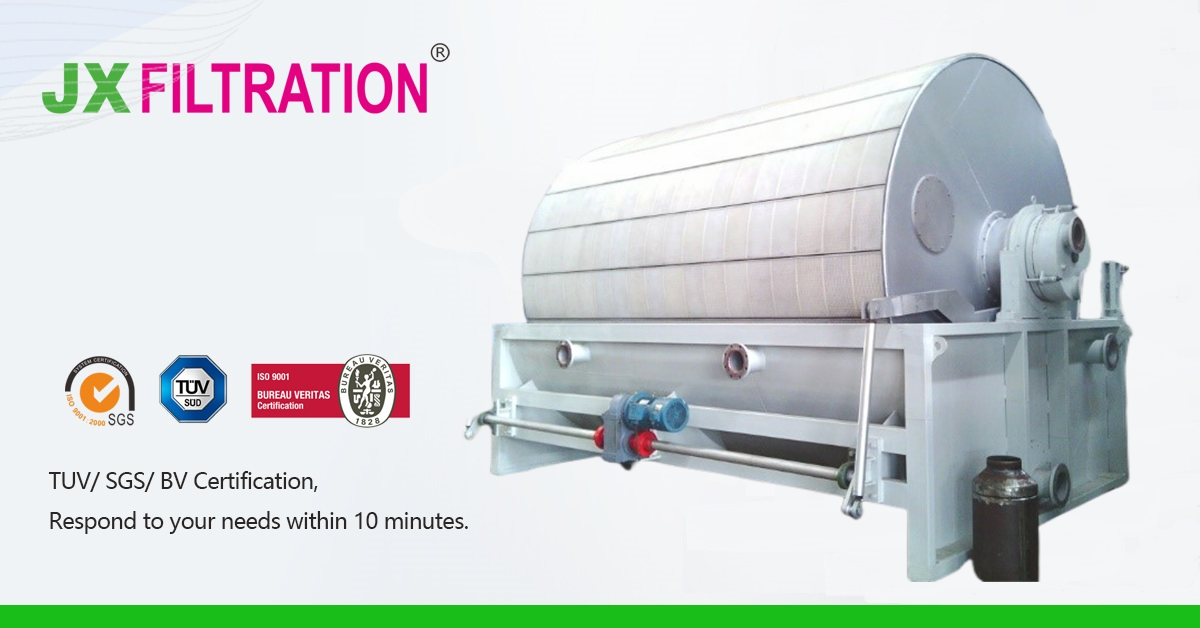
The system consists of a large, rotating drum covered with a filter cloth or mesh. The drum is partially submerged (typically 25–40%) in a trough containing the slurry to be filtered. Internally, the drum is divided into separate compartments, each connected to a central automatic valve that controls vacuum and air flow.
As the drum rotates slowly, each compartment passes through four distinct stages:
-
Filtration Stage: When a compartment is submerged, vacuum is applied internally. This draws the liquid through the filter cloth into the drum, while solid particles are captured on the cloth surface, forming a "cake."
-
Drying Stage: As the compartment rises out of the slurry, the vacuum continues. Air is drawn through the cake, displacing residual liquid and partially drying the solids.
-
Discharge Stage: Just before the compartment submerges again, the vacuum is released. Often, a slight positive pressure (blow-back) is applied to loosen the cake. A scraper blade or discharge roll then removes the solids.
-
Cleaning Stage: The filter cloth may be cleaned from the outside to prevent blinding before re-entering the slurry.
This continuous cycle allows for consistent throughput, making it ideal for large-scale operations requiring minimal labor intervention.
Any requirements, contact us now!
Grace
Email: grace@filtrationchina.com
Mobile/Whatsapp/WeChat: +86 17269571160